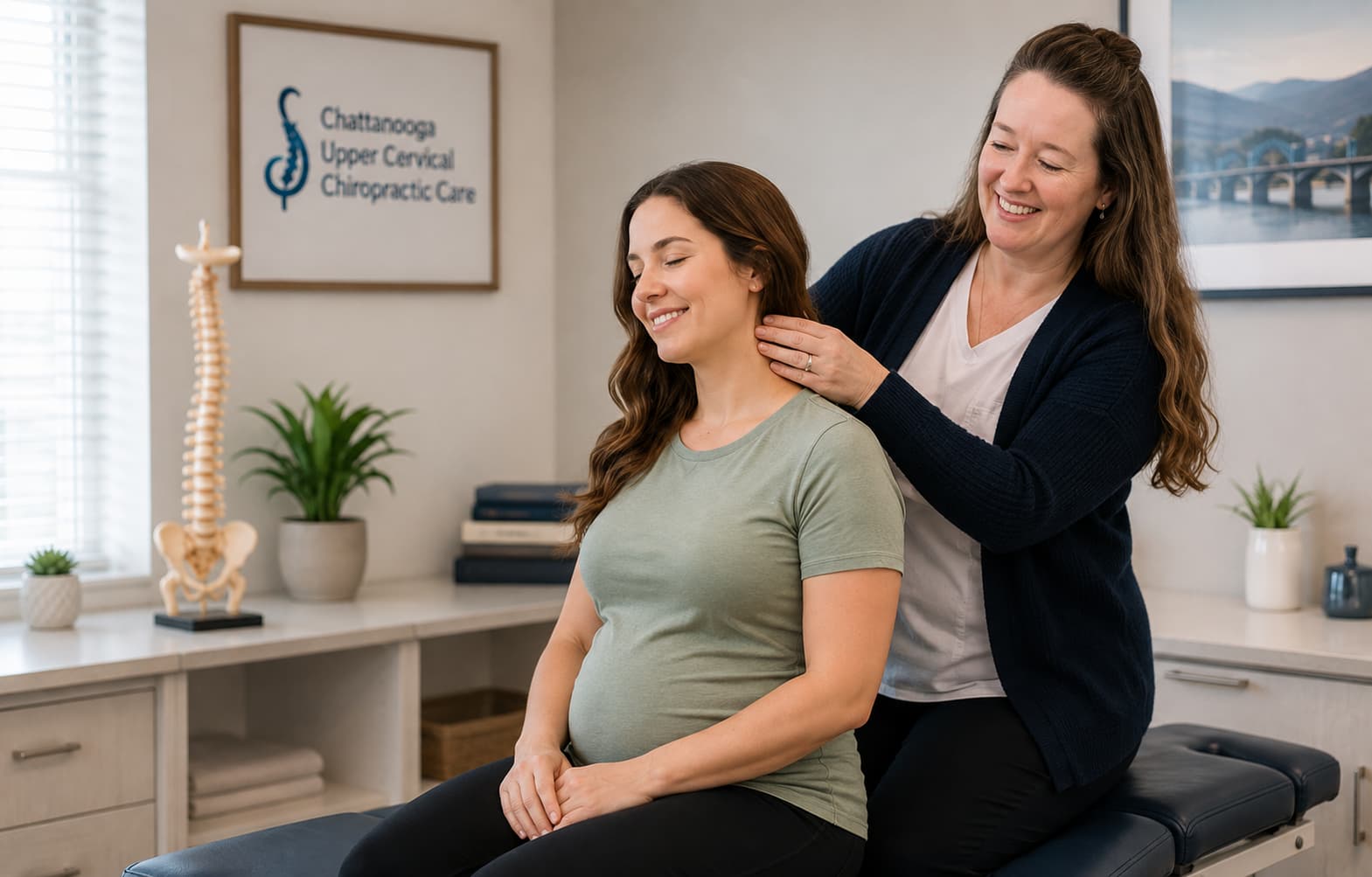


Upper Cervical Chiropractic Care in Chattanooga, TN

Chiropractic & Pregnancy

Gentle Prenatal Chiropractic Care in Chattanooga, TN

Pregnancy brings many changes to the body. As your baby grows, your posture, pelvis, low back, hips, muscles, and joints may all adapt to support the changes happening week by week.
At Chattanooga Upper Cervical Chiropractic, we provide gentle, thoughtful chiropractic care for expecting mothers who want support during pregnancy. Our goal is to help pregnant patients feel heard, comfortable, and informed as they navigate changes in posture, movement, spinal function, and nervous system communication.
Dr. Andrea M. Esau is Webster Certified and has a special passion for helping mothers, babies, and families. Her approach is gentle, patient-centered, and focused on supporting the body through one of life’s most meaningful transitions.
Chiropractic & Pregnancy
parents

Why Pregnant Patients Consider Chiropractic Care

During pregnancy, the body changes quickly. The growing abdomen can shift posture, affect balance, and place added strain on the low back, hips, pelvis, and supporting muscles.
Pregnant patients may consider chiropractic care for concerns such as:
  • Low back discomfort
  • Hip or pelvic discomfort
  • Neck and shoulder tension
  • Posture changes
  • Sciatica-like discomfort
  • Rib or mid-back tension
  • Difficulty getting comfortable while sleeping
  • General spinal wellness during pregnancy
  • Support for movement and body mechanics
  • A natural and non-invasive approach to comfort and function
Every pregnancy is different. A consultation and evaluation help determine whether chiropractic care may be appropriate for your specific needs.
brain

The Spine, Pelvis, and Pregnancy

As pregnancy progresses, the body naturally adapts. The pelvis, spine, muscles, and ligaments all work together to support both the mother and baby.
These changes may affect:
  • Posture
  • Pelvic balance
  • Low back comfort
  • Hip movement
  • Walking patterns
  • Sleeping positions
  • Muscle tension
  • Body awareness
  • Overall comfort
Chiropractic care during pregnancy focuses on evaluating spinal and pelvic function, reducing unnecessary compensation, and helping the body move as well as possible.
vertebral-column

Why the Upper Cervical Spine May Matter During Pregnancy

Upper cervical chiropractic focuses on the top of the neck, where the head and spine meet. This area includes the atlas and axis, also called C1 and C2.
The upper neck helps support head position, posture, balance, and nervous system communication. During pregnancy, posture and balance can change as the body adapts. When the head, neck, spine, and pelvis are compensating, some patients may experience added tension or discomfort.
At Chattanooga Upper Cervical Chiropractic, we look at the body as a connected system. While pregnancy often places attention on the low back and pelvis, the upper neck may also play a role in posture, body balance, and spinal compensation.

What Is the Webster Technique?

The Webster Technique is a specific chiropractic analysis and adjustment commonly associated with pregnancy care.
The goal of Webster care is to evaluate and address sacral and pelvic function. It is often used by chiropractors who work with pregnant patients because pelvic balance and sacral function may influence comfort, posture, and overall body mechanics during pregnancy.
The Webster Technique is not a medical procedure, does not replace obstetric care, and should not be presented as a method to turn a baby or guarantee a particular birth outcome.
Dr. Andrea is Webster Certified and uses her training to provide careful, pregnancy-conscious chiropractic care when appropriate.

Potential Benefits of Chiropractic Care During Pregnancy

Pregnant patients may seek chiropractic care for support with comfort, posture, movement, and spinal function.
Potential benefits may include:
  • Support for low back and pelvic comfort
  • Better awareness of posture and alignment
  • Support for hip and pelvic movement
  • Reduced unnecessary spinal compensation
  • Gentle support for neck, back, and pelvis function
  • Help with body mechanics as pregnancy progresses
  • Patient education for movement, posture, and daily comfort
  • A natural and non-invasive care option
  • Supportive care from a provider familiar with pregnancy needs
Results vary from person to person. Chiropractic care does not guarantee relief, prevent complications, or replace prenatal medical care.

Chiropractic Care During Each Stage of Pregnancy

First Trimester

During early pregnancy, some patients begin noticing fatigue, nausea, posture changes, or early discomfort. Chiropractic care during this stage may focus on gentle support, spinal function, and helping the patient feel comfortable while the body begins to adapt.

Second Trimester

As the belly grows, posture and movement often change more noticeably. Some patients experience low back tension, hip discomfort, pelvic pressure, or difficulty sleeping comfortably. Chiropractic evaluation may help identify areas of compensation.

Third Trimester

In the final months of pregnancy, the body carries more weight and the pelvis prepares for birth. Patients may seek care for low back discomfort, pelvic tension, hip discomfort, rib tension, or general difficulty getting comfortable.

Care should always be gentle, individualized, and coordinated with the patient’s prenatal healthcare team when needed.

Chiropractic Care Does Not Replace Prenatal Care

Chiropractic care should be viewed as supportive care, not a replacement for prenatal care.
Pregnant patients should continue regular care with their OB-GYN, midwife, or prenatal healthcare provider. Any new, severe, unusual, or concerning symptoms should be discussed with the appropriate medical provider.
If you have a high-risk pregnancy, complications, bleeding, severe abdominal pain, signs of preterm labor, reduced fetal movement, severe headache, sudden swelling, vision changes, chest pain, shortness of breath, or any urgent concern, contact your prenatal provider or seek emergency care immediately.

Questions to Ask Before Starting Prenatal Chiropractic Care

Before beginning care, you may want to ask:

At Chattanooga Upper Cervical Chiropractic, we welcome your questions and want you to feel confident before moving forward.

Why Choose Chattanooga Upper Cervical Chiropractic?

Families choose Chattanooga Upper Cervical Chiropractic because we provide gentle, thoughtful, and patient-centered chiropractic care.
Our practice offers:
body
Prenatal chiropractic care
doctor
Webster Certified care with Dr. Andrea
vertebral-column
Upper cervical-focused evaluation
chiropractic (1)
Gentle and specific chiropractic care
solidarity
Patient education
report
Personalized recommendations
conversation
Respectful communication
family
Support for mothers, babies, and families
consultation
A natural and non-invasive care philosophy
Dr. Andrea understands that pregnancy is a personal and powerful season of life. Her goal is to help expecting mothers feel supported, informed, and cared for throughout the process.

Frequently Asked Questions About Chiropractic Care for Kids

Schedule a Prenatal Chiropractic Consultation

If you are pregnant and interested in chiropractic care, we invite you to contact Chattanooga Upper Cervical Chiropractic.

Our team would be happy to answer general questions, explain the new patient process, and help you determine whether a consultation may be the right next step.

Chattanooga Upper Cervical Chiropractic

Important Healthcare Disclaimer

The information on this page is for general educational purposes only. It is not medical advice, diagnosis, treatment, obstetric care, or a guarantee of results.
Chiropractic care may not be appropriate for every pregnancy, person, or condition. A consultation and evaluation are needed before care recommendations are made.

Chiropractic care does not replace prenatal care, emergency care, medical diagnosis, medication, specialist care, imaging, testing, or guidance from your OB-GYN, midwife, or prenatal healthcare provider.
If you are experiencing a medical emergency or urgent pregnancy-related concern, call 911 or seek immediate medical care.